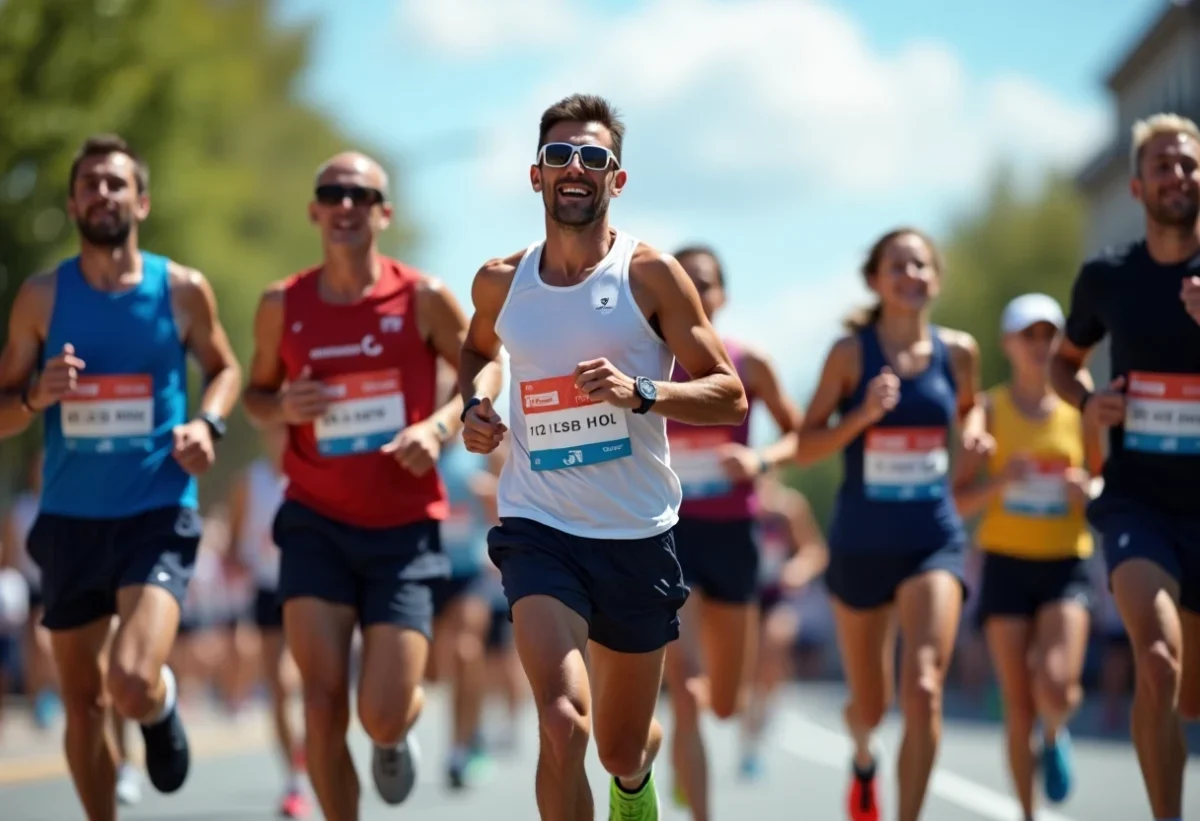
The performances in the half-marathon vary significantly by age and gender, offering a fascinating perspective on the dynamics of human endurance. Young adults, often at the peak of their physical condition, post impressive times, but veterans are not to be overlooked. Indeed, some older runners continue to surprise with their tenacity and experience.
On the other hand, the differences between men and women reveal equally captivating trends. Men tend to record faster times, while women show remarkable consistency and an ability to excel over long distances. These disparities deserve particular attention to better understand the factors influencing race performance.
Average Half-Marathon Time by Gender and Age Group
The French Athletics Federation reveals significant time gaps based on age groups and gender. Men tend to run faster than women, and runners under 35 generally post the best times. For example, the average time to complete a half-marathon for men is 1 hour 59 minutes and 48 seconds, while women record an average time of 2 hours 24 minutes and 3 seconds.
Performance by Age Group
- Senior Men: should aim for 1h15’30
- Senior Women: should aim for 1h45
- Masters 2 Men: should achieve 1h22’30
- Masters 2 Women: should achieve 1h52’30
Median Times by Event
| Half-Marathon | Median Time |
|---|---|
| Nice | 1h53 |
| Nancy | 1h53 |
| La Rochelle | 1h54 |
| Lille | 1h56 |
| Paris | 3h43 |
The data also show that older participants see their performances gradually decline. Young adults often dominate the rankings, while veterans demonstrate admirable resilience, although their speed is affected by the years. The University Campus, for example, records an average time of 1h45 for men and 2h02 for women, illustrating this trend. 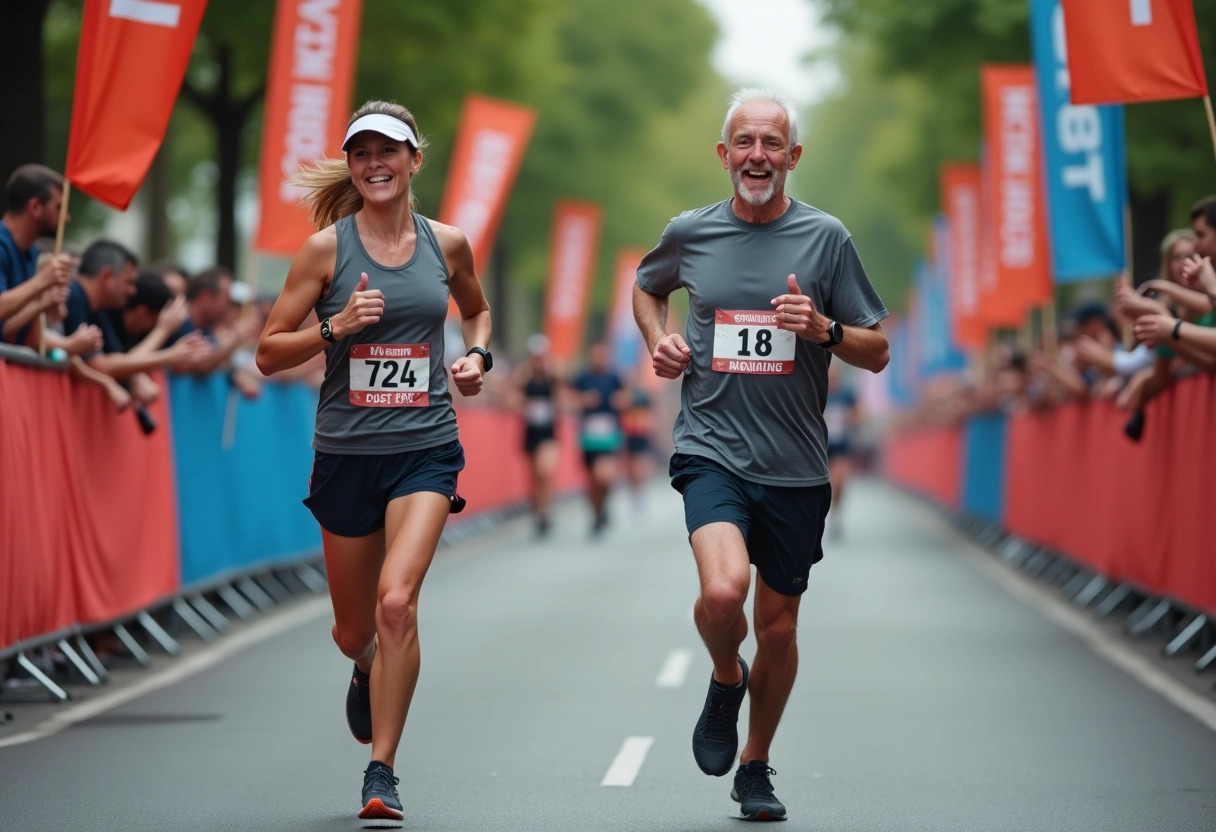
Factors Influencing Half-Marathon Performance
An analysis of half-marathon performance would not be complete without examining the multiple factors that influence these results. The differences between men and women, as well as variations by age, can partly be explained by physiological and environmental elements.
Physiology plays a crucial role. Men generally have a greater muscle mass and higher lung capacity, giving them an advantage in terms of speed and endurance. Women, on the other hand, tend to have better metabolic efficiency, which can translate into better effort management over long distances.
Training and experience are also major factors. Experienced runners, whether young or older, typically show better performances due to mastery of racing strategies and a gradual adaptation of their bodies to exertion. Training plans tailored to each age group and gender help optimize results.
The impact of benchmark records should not be underestimated. The exceptional performances of Jacob Kiplimo (57’31’’) and Letesenbet Gidey (1h02’52’’) set high standards. In France, Julien Wanders (59’13’’) and Mekdes Woldu (1h08’27’’) also serve as inspiring models for national runners. These references contribute to pushing athletes to surpass themselves, thus influencing the dynamics of performance within the running community.
Environmental factors, such as weather conditions and course elevation, also play a significant role. Urban half-marathons, like those in Paris or Lille, may offer more favorable conditions compared to hillier courses like those in La Rochelle, thus influencing race times.
Consider these elements for a thorough analysis of half-marathon performances by age and gender.