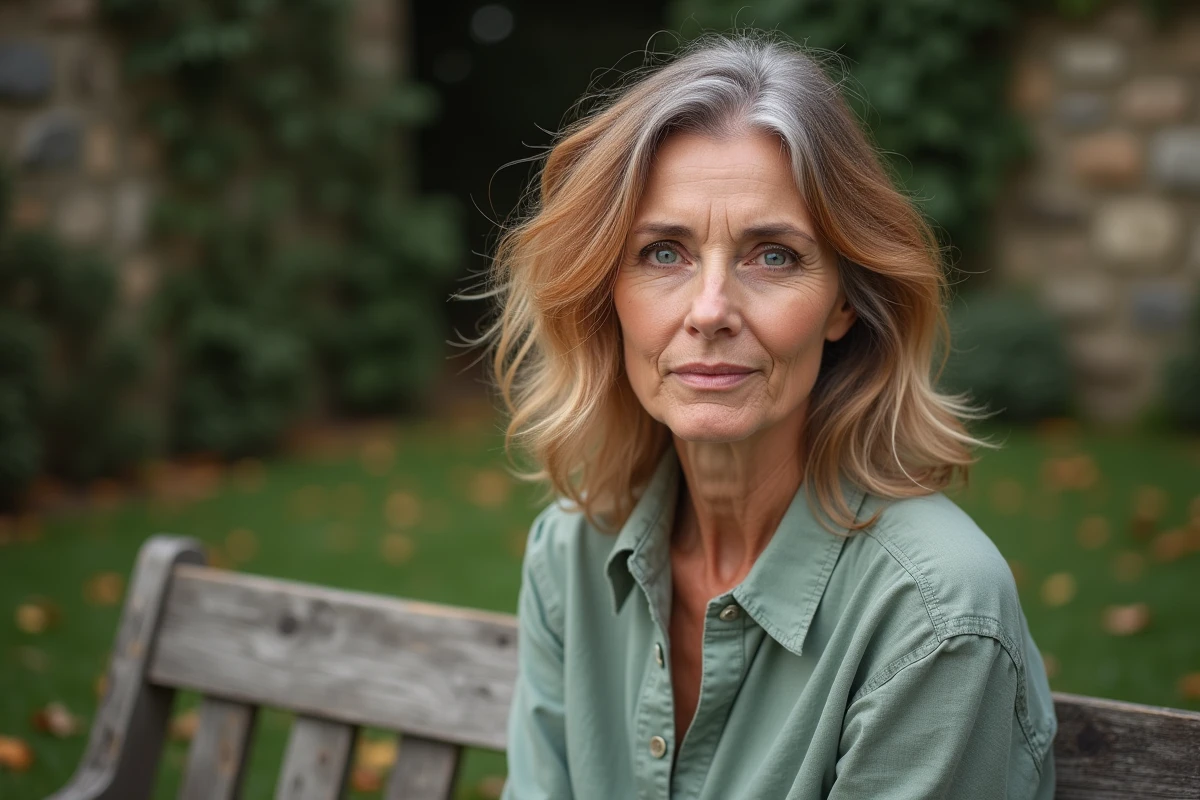
Pheomelanin does not disappear like eumelanin. This biochemical peculiarity conditions the entire process of graying in carriers of homozygous MC1R variants and explains why red hair follows a distinct depigmentation trajectory compared to brown or black hair.
Pheomelanin and hair follicles: why redheads don’t gray like brunettes
Brown and black hair derive their color from eumelanin, a dense, opaque pigment that produces a stark contrast with depigmented hair. When melanin production drops in the follicle, the transition from brown to gray and then to white occurs in visible stages, with the famous “salt and pepper” phase.
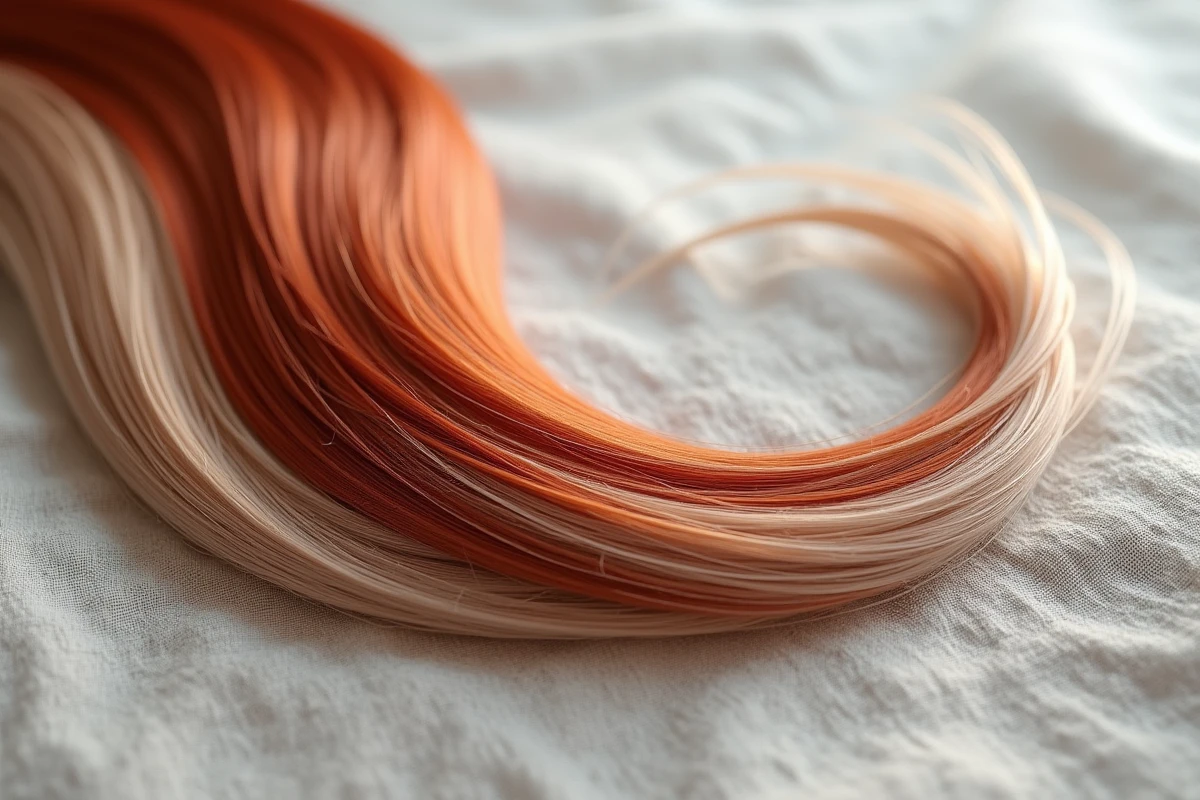
In redheads, the base of eumelanin is already very low. The color relies almost entirely on pheomelanin, a lighter pigment with yellow-orange to red tones. As production decreases with age, the brightness differential between pigmented hair and white hair remains moderate. The intermediate gray phase is therefore barely perceptible, or even absent.
We observe in practice that redheads often go through Venetian blonde shades before turning white, a gradual lightening rather than a stark graying. This phenomenon has been documented in studies on hair follicle biology, notably by M. Ito and K. Kizawa in the Journal of Dermatological Science.
To better understand the aging of red and white hair, it is essential to keep in mind that the perceived color depends as much on the type of remaining pigment as on the total amount of melanin in the shaft.

MC1R mutation and graying: a different genetic timeline
The MC1R gene (melanocortin 1 receptor) is the main genetic determinant of red hair. Its variants modify the functioning of the receptor on the surface of melanocytes, directing production towards pheomelanin at the expense of eumelanin.
This same mutation also seems to modulate the kinetics of hair aging. Several genetic cohorts show that redheads have fewer visible white hairs at the same age than brunettes. The explanation is not a delay in graying in the strict sense, but a reduced contrast between residual pigment and depigmented hair.
In other words, the follicles of redheads do lose their ability to produce melanin with age, at the same rate as others. The difference lies in the visual perception of the result.
Persistent coppery strands after 60
This phenomenon is described in case series in geriatric dermatology: some carriers of MC1R variants retain slightly coppery or reddish strands while the rest of the hair has turned white. Pheomelanin persists in a few individual follicles, creating an effect of localized partial repigmentation.
This is not an anomaly. The distribution of melanocyte activity is never perfectly uniform on the scalp. In redheads, the initially low concentration of pigment makes these inter-follicular variations more apparent at an advanced stage of graying.
Change in texture of red hair with age
Depigmentation is not limited to color. The transition from red to white is often accompanied by a change in hair texture that is more pronounced than for other hair colors.
Red hair naturally has a finer shaft diameter and lower follicular density than brown or black hair. With the loss of melanin, the shaft becomes more porous and rougher. We find that redheads more often report hair becoming dry and brittle as they age.
- Pheomelanin, as it decreases, leaves the hair cortex less protected against oxidation, which increases the mechanical fragility of the fiber.
- The cuticle, already thinner in redheads than in brunettes, loses cohesion with age, making the hair more permeable and harder to style.
- The change in texture often precedes complete whitening, which can be surprising: the hair changes in feel before visibly changing color.
Hormones and melanin production in redheads: the role of puberty and menopause
Hormonal fluctuations modify pigment production in hair follicles at every stage of life. In red children, color can intensify significantly at puberty under the influence of sex hormones, which stimulate melanocyte activity.
Conversely, the hormonal drop associated with menopause or andropause accelerates the reduction of melanin production. Redheads often lose their color intensity as early as their forties, well before the appearance of stark white hairs. This gradual fading constitutes the first visible step in the graying process, specific to the pheomelanin trajectory.
Hair color in red babies and children
A commonly misunderstood point: a child’s red color is not definitive at birth. Babies carrying MC1R variants may be born with very light, almost blonde hair, then see their hair darken to red over the first few years as pheomelanin production fully establishes.
This reverse phenomenon – darkening before lightening – illustrates that red color is a dynamic state, directly indexed to hormonal activity and the age of the follicle.
Fair skin, MC1R genes, and hair aging: a related vulnerability
MC1R variants do not only control hair color. They also influence skin pigmentation and sensitivity to UV. Redheads produce less eumelanin in the skin as well as in the follicles, which exposes them more to oxidative stress.
This accelerated oxidative stress at the hair bulb could contribute to the early depletion of melanocyte stem cells. The graying of redheads is therefore linked to the same genetic vulnerability as their skin sensitivity, a connection that research on melanoma and MC1R has helped clarify.
The red-Venetian blonde-white trajectory remains the norm for the majority of carriers of MC1R variants. Some follicles resist longer than others, texture often changes before color, and the classic “salt and pepper” graying hardly occurs. Each redhead’s hair follows its own timeline, but the underlying mechanism remains the same: a pheomelanin that gradually fades, never producing the stark contrast experienced by brunettes.