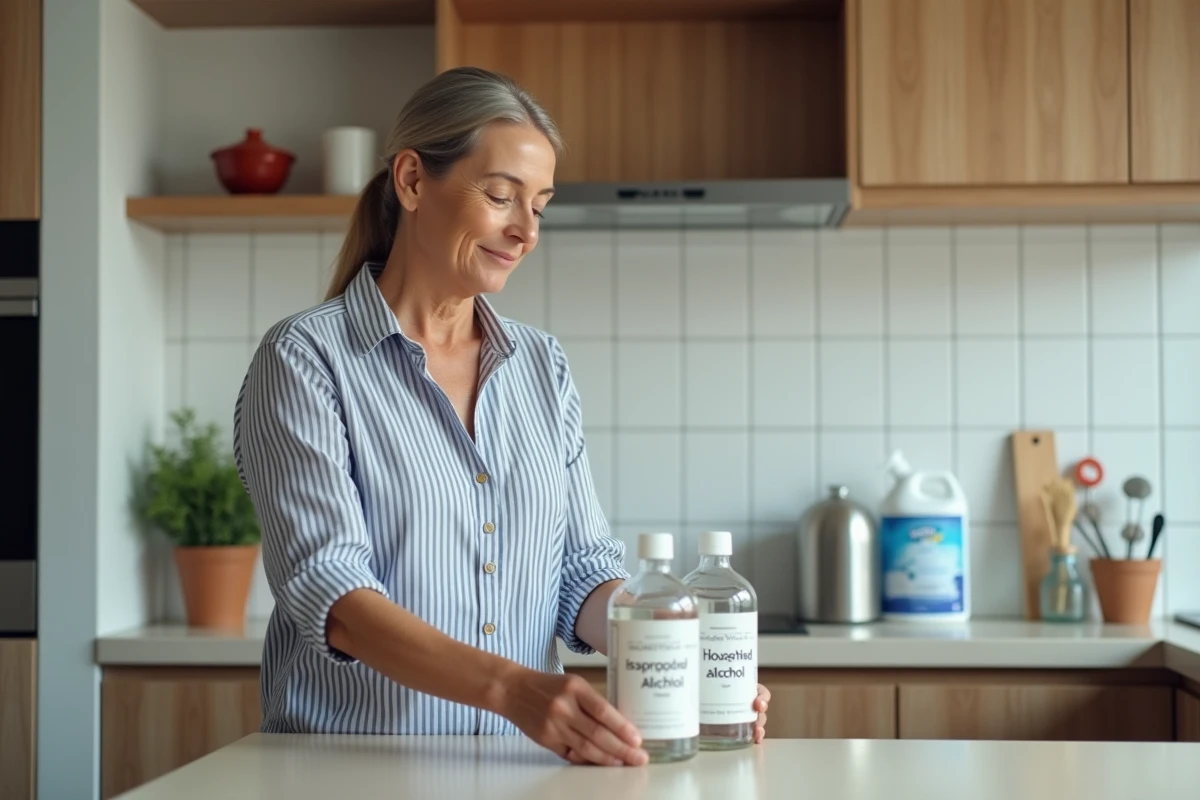
Sometimes a single figure is enough to shake certainties: 70%. Beyond this alcohol threshold, the promise of disinfection is displayed on labels, but reality does not always hold true in the bottle. Ethanol, isopropanol, additives… Behind the apparent simplicity of cleaning products lies a complex mechanism governed by strict standards and public health stakes. Understanding it helps avoid many pitfalls and ensures hygiene that meets expectations.
Understanding the specifics of isopropyl alcohol and household alcohol
In most households, household alcohol has become an essential item in the cleaning cupboard. This ethanol-based mixture, sometimes enhanced with methanol and coloring agents, is designed to deter ingestion while remaining manageable and relatively neutral in odor. Budget-wise, it is a good student, and its effectiveness on everyday stains is appealing: cleaning, deodorizing, stain removal, degreasing—the list of uses is long. Tiles, stainless steel, windows, plastics, or even certain textiles: the compatible surfaces are numerous, which explains its presence in most homes.
In contrast, isopropyl alcohol or isopropanol rarely makes its way into everyday life. It is mostly found in technical environments, laboratories, and precision industries. Its composition, free of methanol, makes it a valuable ally for effective disinfection without leaving traces or damaging sensitive surfaces. Electronic equipment, optics, medical devices: where cleanliness tolerates no approximation, it becomes crucial. Its volatility speeds up drying, limiting unwanted residues.
The difference between isopropyl alcohol and household alcohol goes beyond their composition. It extends to their areas of application, effectiveness against targeted microbes, and especially, the quality of the result on each type of surface. Cleaning a countertop after a meal is not the same as disinfecting medical equipment or a computer motherboard. Therefore, before choosing, one must consider the surface to be treated, the resistance of microorganisms, the environment, and user safety.
Isopropyl alcohol or household alcohol: which is more effective for disinfection?
When it comes to disinfection, approximation has no place. When the risk of infection is real, isopropyl alcohol is essential. Used at 70%, it proves formidable against most bacteria and many viruses while respecting the integrity of the most delicate equipment. Its lack of methanol and additives minimizes traces and reduces the risk of damaging circuits or components. It is the reference tool for laboratories, healthcare professionals, and technicians who leave nothing to chance.
On the other hand, household alcohol shines with its versatility. It meets the majority of everyday needs: disinfecting a doorknob, cleaning a table, refreshing a bathroom. Provided that the alcohol content reaches 70%, it eliminates most bacteria, dirt, and unpleasant odors. Its success lies in its ease of use and affordability for everyone.
However, there is a gap between these two solutions, especially regarding surface tolerance and the presence of additives. Household alcohol, despite its qualities, can damage varnished furniture, delicate fabrics, or electronics. Isopropyl alcohol, being purer, is designed to meet the strictest requirements where the risks of infection and degradation are high.
Here’s how to guide your choice according to the situations:
- Isopropyl alcohol: reserved for electronic devices, medical instruments, fragile surfaces, or professional use.
- Household alcohol: suitable for regular maintenance, cleaning robust surfaces, and making disinfectant sprays for the home.
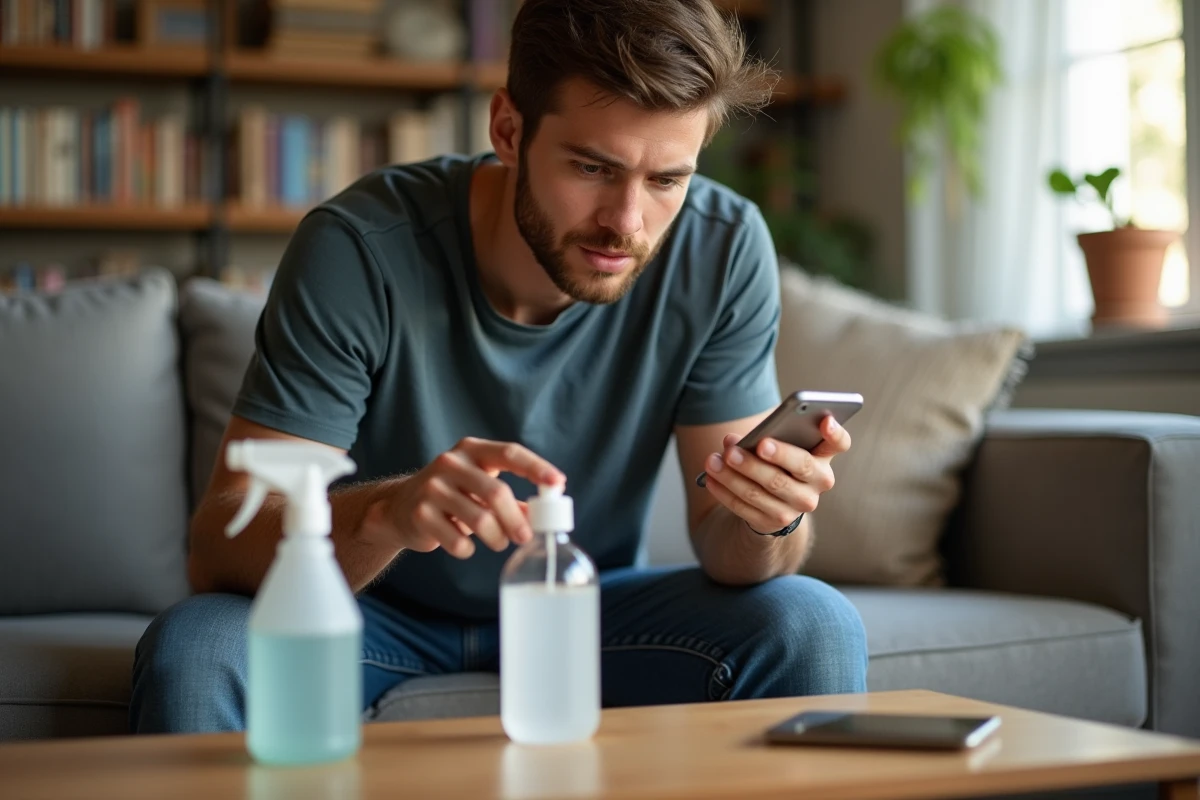
Practical tips for choosing the right alcohol based on your cleaning and disinfection needs
For regular maintenance of an interior, household alcohol remains a safe bet. Its range of action extends from tiles to stainless steel, including glass, plastic, or linoleum. It is appreciated for its effectiveness on stains, its ability to disinfect common surfaces, and its capacity to neutralize stubborn odors. Always prioritize a concentration of 70% for disinfection, taking care to wear gloves, ventilate the room, and store the product out of reach of children or pets. Its flammable nature also requires keeping any source of flame away during use.
For sensitive equipment, isopropyl alcohol is essential. It cleans without residue, dries quickly, and limits the risk of damage. Its place is well-defined for screens, keyboards, camera lenses, or medical instruments, as long as precision and absence of traces take precedence over versatility.
Here are some concrete tips to avoid unpleasant surprises:
- Never apply household alcohol on varnished wood, lacquered surfaces, delicate fabrics, toys meant to be mouthed, or electronic devices.
- Do not mix household alcohol and bleach: the chemical reaction can be dangerous.
- For a homemade disinfectant spray, combine household alcohol, distilled water, and, if needed, a few drops of essential oils.
Easy to find in supermarkets or drugstores, household alcohol remains the companion for domestic tasks, while isopropyl alcohol targets technical or medical interventions. Each use has its solution, each surface its product. Given the diversity of risks and uses, the right choice becomes evident, far from inherited reflexes.
Ultimately, choosing the right alcohol means opting for precision over approximation. This redefines the contours of hygiene, well beyond the simple daily gesture.