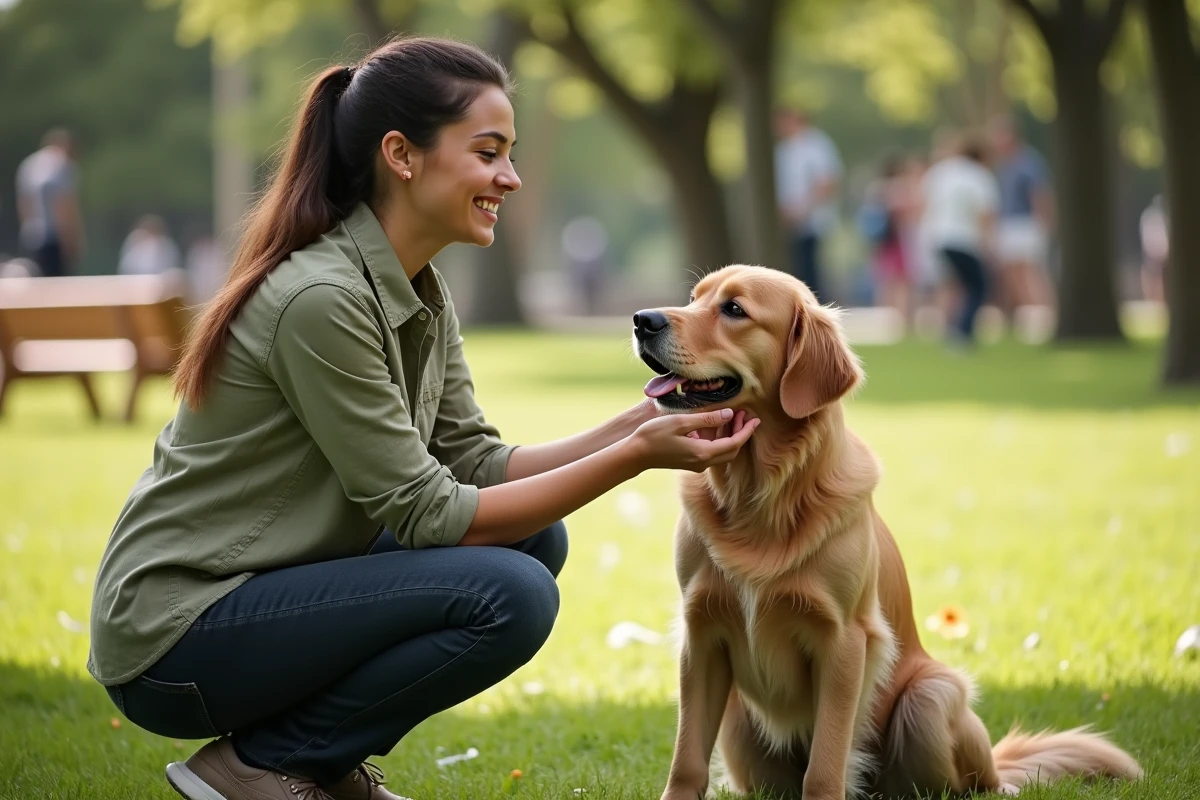
A dog pulling on a leash in a train station, a puppy destroying the couch during a two-hour absence, a recall that only works in the garden: we all know these situations. Understanding your dog starts with accepting that every behavior has an identifiable cause, and that we can address it methodically. This guide brings together practical advice that makes a difference in daily life, from puppy socialization to managing an adult dog.
Puppy Socialization: The On-the-Ground Mistakes That Cost Dearly Later
Most behavioral problems in adult dogs stem from insufficient or poorly conducted socialization between the third and twelfth weeks of life. We often think we are doing the right thing by protecting the puppy from all stimuli, while gradual exposure to noises, crowds, and varied surfaces is essential.
In practice, we find that puppies raised in a calm and monotonous environment more frequently develop fearful reactions to new situations. Laval University officially integrated Mira puppies on its campus in 2024-2025 for daily socialization in a highly stimulating environment: noise, crowds, transportation, multiple buildings. This protocol structures exposure even before entering a training center.
For an individual, this logic can be replicated on a smaller scale. Taking the puppy to different places each week, varying the surfaces (grass, gravel, tile), and encountering humans of various ages. The trap is wanting to do everything in one day: a trip that is too long or too intense has the opposite effect and sensitizes the puppy instead of desensitizing it.
Detailed resources on this topic and many others can be found on the dog pages on AlmAnimal, which cover both health and daily canine behavior.
Daily Dog Training: What Works in Real Situations
Dog training tutorials often show a calm dog in a fenced garden, with a focused owner. The reality is a dog excited by a squirrel while you hold two shopping bags. Training is tested in difficult contexts, not in ideal conditions.
The recall is the best example. A dog that comes back to a whistle in the living room does not master the recall. It performs it in a distraction-free environment. To progress, we increase distractions in stages:
- First, the garden, with a few visual stimuli (birds, passersby behind the fence), using a long line to maintain control without blocking the dog
- Next, a quiet park during off-peak hours, where new smells already present a concentration challenge for the animal
- Finally, a busy place (market, school surroundings), where the recall competes with dozens of simultaneous stimuli
Each stage takes several weeks. If the dog consistently fails at a stage, we return to the previous one. Feedback varies on this point, but forcing progression remains the main cause of failure in learning the recall.

Dog Health: Spotting Signals That Owners Often Overlook
People usually take their dog to the vet for vaccinations or when a visible problem arises. In between, many signals go unnoticed because we don’t know what to observe.
Eating Behavior and Weight
A dog that has been eating less for a few days is not necessarily being “picky.” A prolonged decrease in appetite beyond 48 hours warrants a consultation. Similarly, an animal that drinks much more than usual may signal a renal or metabolic problem.
Weight can be easily checked: you should be able to feel the dog’s ribs under a thin layer of fat without having to press hard. If the ribs are invisible and hard to feel, overweight is already established. This tactile criterion is better than a scale alone, as the ideal weight varies greatly depending on each animal’s morphology.
Postures and Movements
A dog that gets up more slowly in the morning, hesitates before climbing stairs, or alters its gait is likely compensating for joint pain. These adjustments are subtle and develop gradually, making them easy to miss.
Filming your dog in motion once a month allows you to compare sequences and spot a developing limp that you might not have seen with the naked eye. It’s a simple tool that veterinarians increasingly recommend during follow-up consultations.
Dog Accessories and Products: Choosing Without Overpaying
The pet accessory market offers a plethora of options, from a twenty-euro harness to an ergonomic model costing four times that. The choice should not be made based on budget, but on actual use.
- For the leash, a fixed model of medium length is suitable for most urban situations, while retractable leashes complicate leash training and give the owner less control
- For bedding, the size of the bed should allow the dog to lie fully on its side, legs extended, with a margin of a few centimeters
- For interactive toys, prioritize those that engage the sense of smell (snuffle mats, stuffed Kongs) rather than purely mechanical toys, as mental stimulation tires the dog as much as physical exercise
An ill-suited accessory is not just useless: a harness that rubs causes skin irritations, and a bowl that is too high alters the eating posture. Observing the dog during use remains the best indicator.
Dogs in the City and Access to Public Places: Rights and Practical Constraints
Walking your companion in an urban environment requires knowing a few basic rules. In France, leash laws are mandatory in most public spaces, and some municipalities require muzzles for certain dog breeds.
For guide and assistance dogs, the right to access public transport and places is guaranteed by law. In practice, tensions persist: increased checks in some transport networks, the need for a clearly identifiable harness, specific procedures in case of complaints from users. The right to access exists, but its concrete application still depends on the location and the individual involved.
For any dog owner in the city, the key is anticipation: identifying allowed parks, knowing peak hours, and always having the means to pick up waste. These are simple gestures, but their absence fuels tensions between dog owners and residents, ultimately leading to stricter local regulations.