Which fashion trends truly deserve your attention, and which are just seasonal noise? Between the colors showcased on the runways, the recycled pieces gaining ground, and the new European regulations reshaping how clothing is designed, everyday style is no longer just about choosing a cut or a color. This article compares the concrete levers to enhance your style while considering what is actually changing in fashion.
European textile regulation: what is already changing the in-store offer
Most articles on fashion trends overlook a factor that directly impacts the collections available in stores: the European regulatory framework. The ESPR regulation (Ecodesign for Sustainable Products Regulation), adopted in 2024, places textiles among the priority sectors of its 2025-2030 work plan.
Specifically, large companies will no longer be able to destroy their unsold textiles starting from July 19, 2026. Medium-sized enterprises will be affected from July 19, 2030, with exceptions related to safety or the impossibility of reuse. A specific regulatory act for clothing is planned for 2027, which should impose measurable criteria for sustainability and reparability.
For you, this means that the pieces offered in stores will gradually become more robust. Resistance to pilling, seam strength, and ease of repair will no longer be mere marketing arguments but regulated criteria. Choosing durable clothing is no longer just an ecological gesture: it aligns with the direction the industry is taking.

To keep up with these developments and find fashion inspirations suited to these new standards, the blog Les Instants D’Une Blogueuse regularly offers selections of pieces designed to last through the seasons.
Second-hand or durable new: a comparison to refresh your style
Two strategies coexist for refreshing a wardrobe without unnecessary accumulation: buying second-hand or investing in new items designed to last. Each approach has its strengths and concrete limitations.
| Criterion | Second-hand | Durable new (post-ESPR) |
|---|---|---|
| Cost per piece | Significantly lower than new | Higher at purchase, amortized over time |
| Variety of styles | Wide, but random stock | Targeted collections, constant availability |
| Guaranteed durability | Variable depending on existing wear | Regulated criteria from 2027 |
| Actual ecological impact | Positive if the piece replaces a new purchase, nuanced if it adds to them | Reduces waste through the ban on destroying unsold items |
| Traceability | Low (history rarely known) | Digital product passport planned by the ESPR |
The second-hand market is experiencing marked growth. However, as Le Parisien pointed out in September 2026, second-hand alone does not guarantee more sustainable consumption: it can encourage more frequent clothing rotation if it adds to new purchases rather than replacing them.
The most effective approach combines both: selected new basics for their longevity, complemented by character pieces found second-hand. It is this complementarity that allows for building a distinctive style without constantly renewing the wardrobe.
Colors and key pieces for autumn 2026: reading the signals from the runways
The color trends for autumn 2026 confirm a shift towards deep shades and textured materials. Rather than listing all the micro-trends, let’s focus on what truly impacts your daily choices.
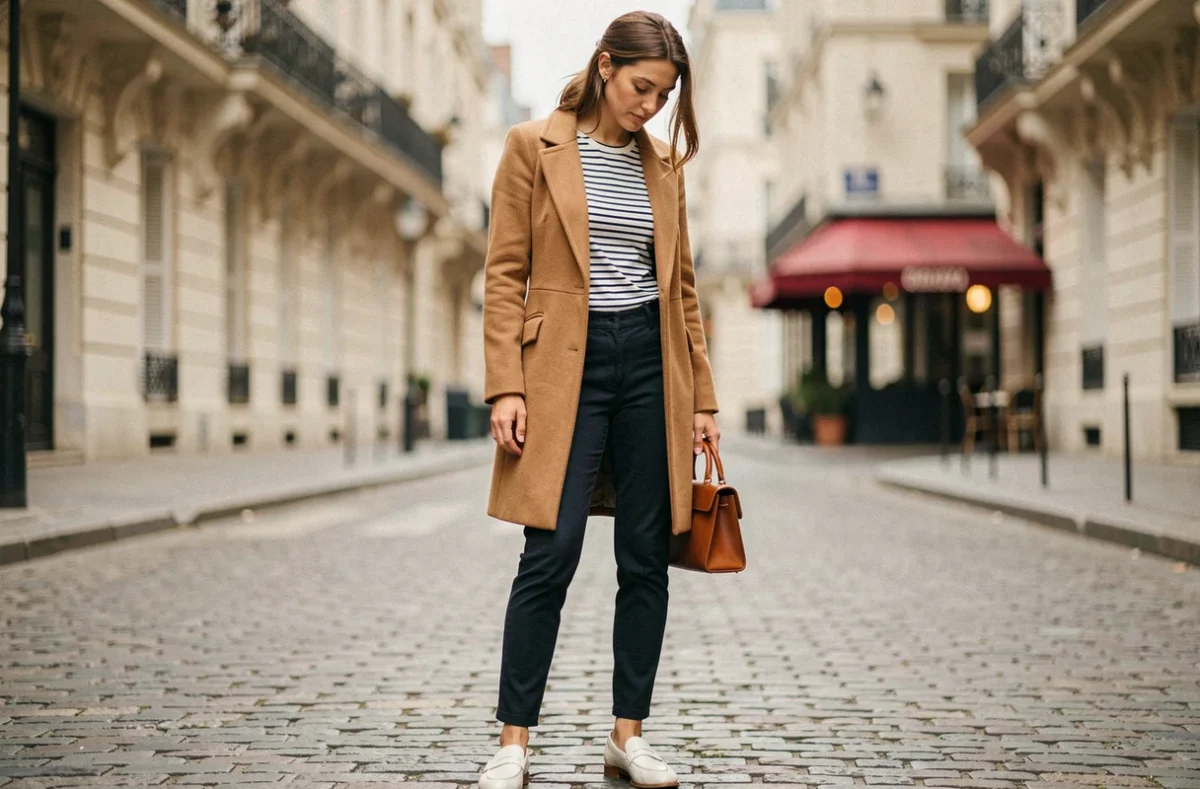
- Earthy colors and warm tones (rust, burgundy, camel) dominate seasonal palettes, making them easy to integrate into an existing wardrobe without a complete overhaul
- The oversized sweater remains a central piece for mid-season, capable of working well layered over a dress or with barrel jeans or straight pants
- Short, structured jackets are gaining ground against classic blazers, offering a balance between a dressed-up look and comfort of movement in daily life
- Subtle prints (fine stripes, tone-on-tone patterns) are gradually replacing visible logos, signaling a style that emphasizes texture over display
Focusing on neutral and deep colors reduces the risk of pieces going out of style in a season. A beige pair of trousers or a trench in an earthy shade can last through several autumns without looking dated, aligning with the sustainability logic promoted by the regulation.
Building an everyday style without succumbing to overaccumulation
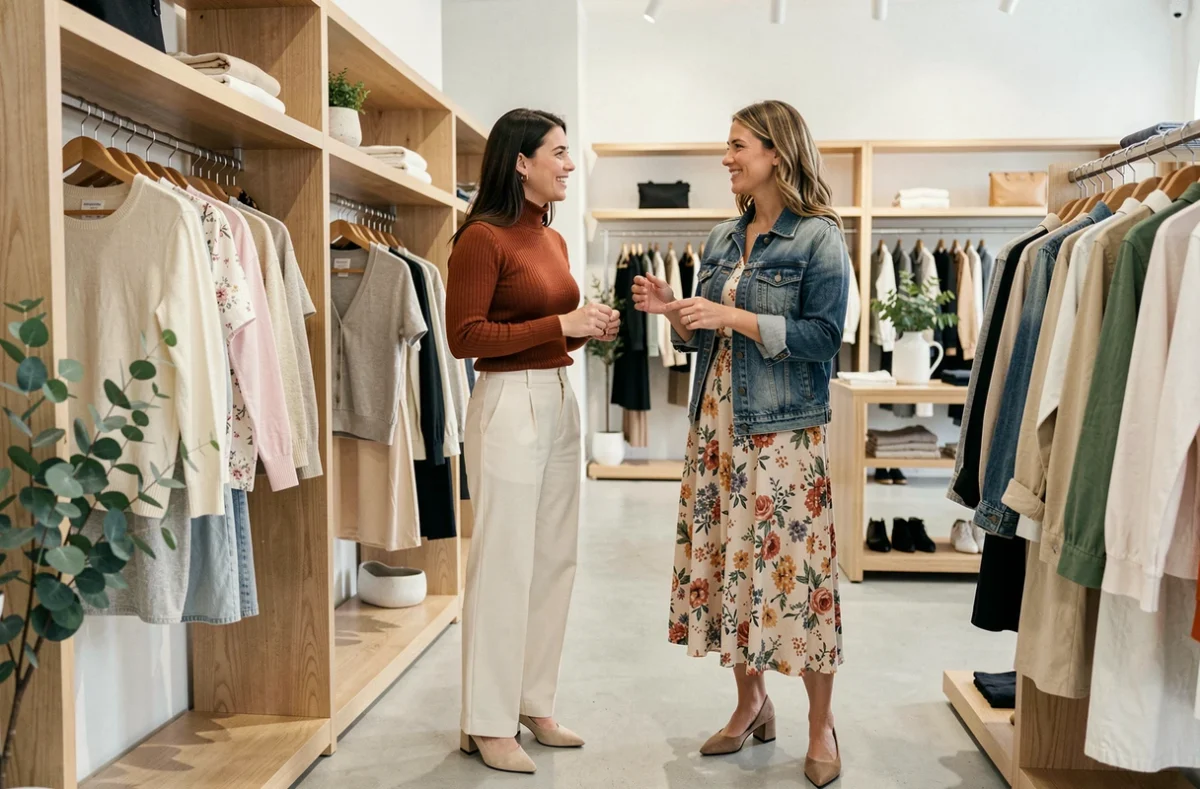
The real challenge lies not in choosing a trend, but in the ability to assemble coherent pieces from a limited wardrobe. Sustainable fashion requires a change in reflex: think in combinations rather than purchases.
A functional wardrobe relies on a core of versatile pieces. Two to three neutral bottoms (raw jeans, straight pants, midi skirt), paired with four or five tops in varied materials and cuts, already generate several dozen distinct outfits. The key is cross-compatibility: each piece should be able to be worn with at least three others.
Accessories play an underestimated role in this logic. A belt, a scarf, or a bag in a different color can transform a basic outfit into a bold look. It is often through accessories that personal style is revealed, not through the statement piece.
- Favor natural or mixed materials with a dense weight that retain their shape after many washes
- Check the durability of finishes (seams, buttonholes, hems) before purchase, including on second-hand pieces
- Adapt your wardrobe’s color palette to two or three compatible color families to increase combinations
The digital product passport planned by the ESPR will soon facilitate this process by making composition and care information accessible directly from a QR code on the label. This system, expected in the coming years, will allow for verifying a garment’s traceability before purchasing it.
Enhancing your everyday style is less about following every micro-trend and more about understanding the forces shaping the textile offer. European regulation pushes towards sturdier clothing, second-hand offers variety at a lower cost, and current seasonal palettes favor durable shades. A well-curated and thoughtfully constructed wardrobe remains the most reliable lever for a distinctive style, season after season.