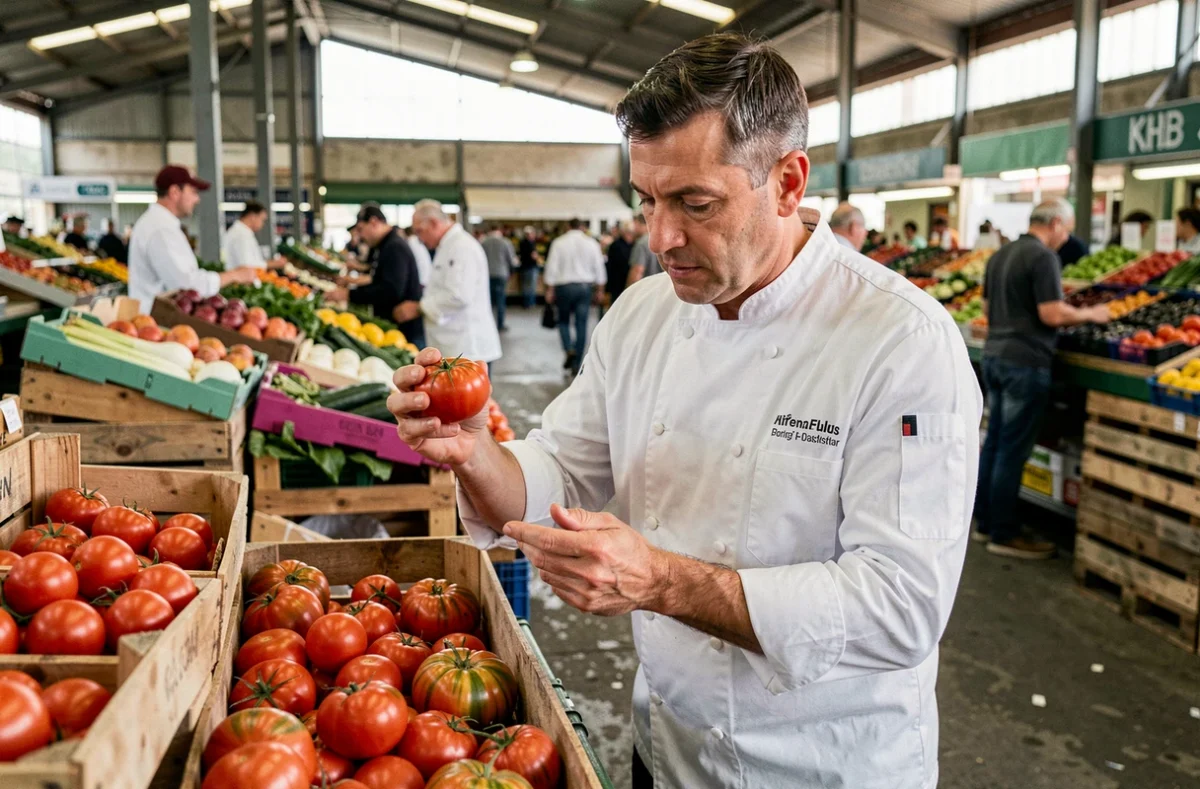
Choosing a supplier of fresh fruits and vegetables for a professional involves balancing several simultaneous constraints: regulatory compliance, consistency of quality, control of material costs, and logistical flexibility. Since 2024, the EGAlim obligations also apply to private collective catering, which changes the selection criteria well beyond mere perceived freshness.
EGAlim Obligations and UPSA Law: What the Supplier Must Prove
Before comparing prices or logistics, the primary selection criterion for a supplier is now regulatory. Since 2024, private collective catering is subject to the same obligations as the public sector.
The EGAlim law sets a threshold of 50% of sustainable and quality products in food purchases (excluding VAT), including a minimum of 20% organic products. For a corporate caterer or a concessionaire, this means that the chosen supplier must be able to document the share of its eligible references: organic, HVE, SIQO, fair trade, or level 2 environmental certification.
The UPSA law of 2026 adds an additional layer for public canteens: sourcing must come exclusively from the European Union, unless there is proven unavailability of a given product. A supplier offering non-EU origins without documented European alternatives becomes a legal risk for the public buyer.
The ability of a wholesaler to provide a detailed list of EGAlim eligible references, with traceability of geographical origin, thus serves as a first filter even before discussing price or logistics. Professionals listed on vallette.fr incorporate this requirement into their current offerings, simplifying compliance for buyers subject to these obligations.
Comparison of Fresh Fruits and Vegetables Supply Models
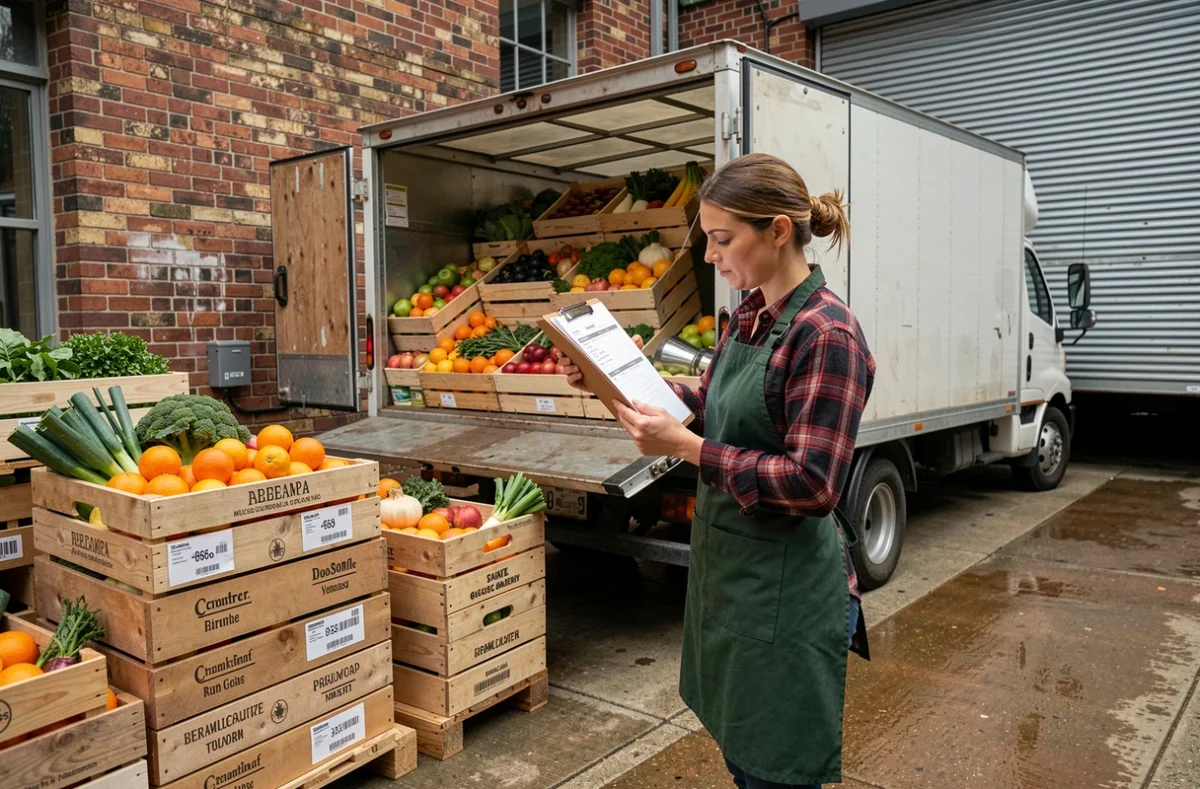
The choice of supply channel determines freshness, price, and flexibility. Three models dominate the professional market in France.
| Criterion | Wholesale on the market (Rungis, MIN) | Full-service wholesaler | Direct producer circuit |
|---|---|---|---|
| Range width | Very wide, multi-origin | Wide, structured catalog | Narrow, seasonal |
| Average freshness | Variable depending on arrival | Controlled, cold chain managed | Maximum (harvest on the day or the day before) |
| EGAlim compliance | To be checked lot by lot | Often documented | Frequent organic or HVE, but limited range |
| Order flexibility | On-site purchase, no fixed minimum | Online ordering, variable thresholds | Volumes and schedule negotiated in advance |
| Delivery | On-site pickup or third-party carrier | Integrated delivery | Direct delivery, limited frequency |
| Price transparency | Daily market price, spot prices | Weekly or contractual pricing | Fixed price or indexed to the season |
The wholesale market (Rungis or national interest markets) offers the greatest diversity but requires physical travel and the ability to assess the merchandise on-site. The full-service wholesaler delivers and documents, which suits structures without a dedicated buyer. The direct circuit guarantees maximum freshness; however, it never covers the entirety of a restaurant menu.
Why Combine Two Channels
A single supplier does not cover all the needs of a demanding professional. The most common practice is to rely on a full-service wholesaler for the base (basic products, regular volumes) and to supplement with a direct producer circuit for seasonal references or signature products.
This combination helps secure the supply while maintaining a sufficient rate of EGAlim eligible products. It requires verifying that both suppliers use traceability systems compatible with the buyer’s reporting obligations.
Market Prices and Material Costs: Reading Prices Beyond the Displayed Rate
The face price of a kilogram of tomatoes or apples is not enough to compare two suppliers. Several variables affect the actual cost for the professional.
- The frequency of market price updates: a wholesaler who updates their prices daily reflects the real market, allowing for menu adjustments. A fixed weekly price list may hide a sudden increase or prevent taking advantage of a decrease.
- The loss rate upon receipt: fruits delivered too ripe or damaged vegetables increase the effective material cost without appearing on the invoice. Asking for the average return rate accepted by the supplier provides a reliable indication.
- Delivery fees and minimum order thresholds: an attractive price per kilo loses its advantage if the minimum order requires storing excessive volumes, leading to waste.
- Payment terms: a longer payment period can offset a slightly higher price for tight cash flow.
Significant occasional variations in certain fruits and vegetables regularly occur after climatic events. A supplier transparent about their policy for passing on price increases (immediate, smoothed, capped) offers better budget visibility.
Traceability and HACCP Certification of the Fruits and Vegetables Supplier
The HACCP regulation applies to the entire food chain, including suppliers. A professional receiving fruits and vegetables must be able to justify that their supplier adheres to good hygiene practices, particularly controlling the cold chain for sensitive products (4th range, aromatic herbs, small fruits).
Requesting a copy of the supplier’s health control plan is not an administrative formality. In the event of an inspection, the professional buyer is co-responsible for the compliance of the products they serve. Ensuring that the wholesaler has a health approval or documented exemption, depending on their activity, is part of the minimum due diligence.
Lot-by-lot traceability, including origin, harvest date, and lot number, also becomes a commercial tool: a restaurateur able to indicate the exact origin of their vegetables on their menu meets a growing expectation from their clientele.
Ultimately, the choice of a supplier of fresh fruits and vegetables hinges on their ability to document what they sell: listed EGAlim references, updated market prices, lot-by-lot traceability, accessible HACCP plan. These elements are verifiable before any order and form the basis of a sustainable business relationship.