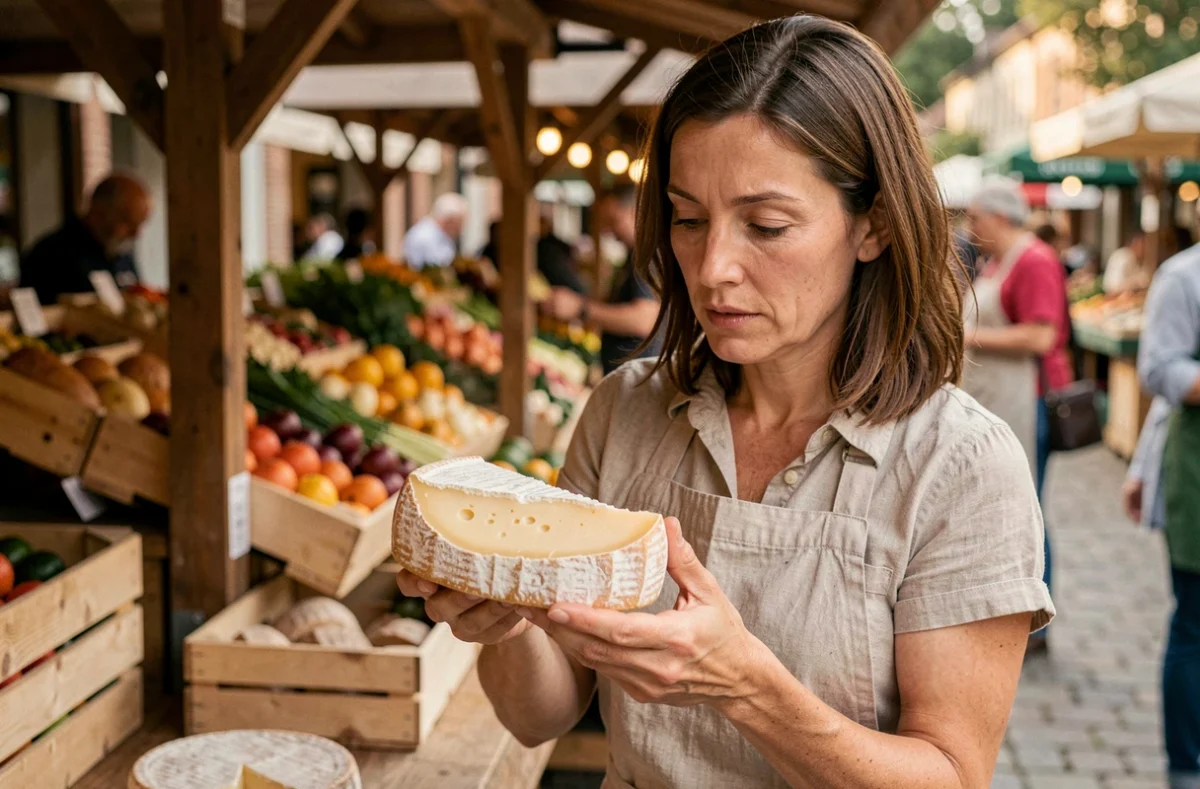
In front of a cheese counter, the question quickly arises when avoiding gluten: which one to put in the basket without a second thought? Traditional cheese relies on a short recipe (milk, rennet, cultures, salt). No grains are part of this base. The problem does not come from the cheese itself, but from what the industry adds around it or what happens after production.
Understanding where gluten can sneak in saves time in the store and allows for peaceful eating. This article details the concrete points of vigilance, from the counter to the label.
Contamination at the counter and service: the risk that the label does not indicate
You buy a slice of Comté, naturally gluten-free. The composition is impeccable. However, contamination can come from the knife or the board, not from the recipe.
A cheesemonger who slices bread, handles breaded products, or prepares a mixed platter sometimes uses the same surfaces and utensils. This unintentional transfer of gluten is not indicated on any label, as it occurs after production.
This situation mainly concerns three specific cases:
- Cheeses sold by the slice at a market or supermarket, where the slicer is used for multiple products throughout the day.
- Cheese platters prepared in-store, often placed next to crackers or bread.
- Buffets in collective catering, where tongs and spatulas move from one dish to another without systematic cleaning.
For people with celiac disease, this detail changes everything. A threshold of 20 mg/kg is enough to trigger symptoms in some. When you know which gluten-free cheese to choose, also consider asking for a slice from a clean surface or opting for pre-packaged portions.
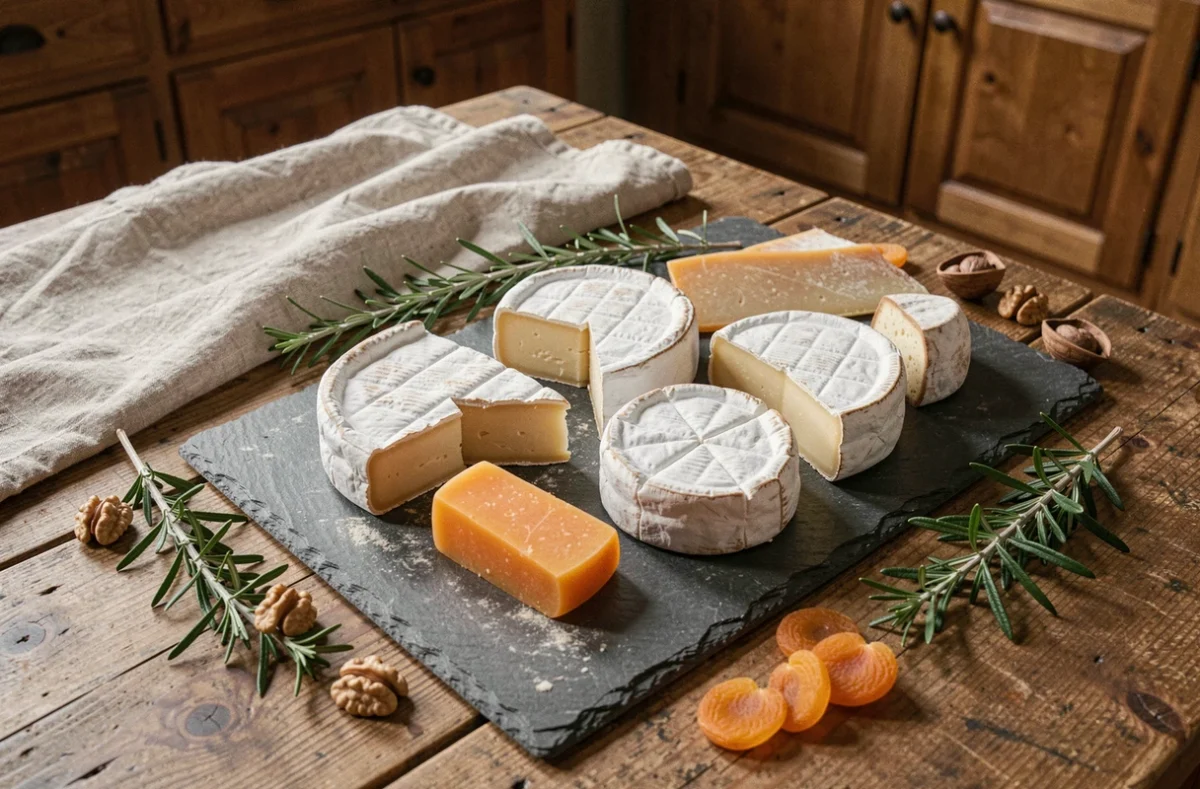
Industrial cheeses and additives: read the ingredient list, not the slogan
A plain cheese made from milk, salt, and cultures does not contain gluten. But as soon as the recipe gets longer, vigilance is required.
Wheat starch and thickeners in processed cheeses
Processed cheeses, spreads, and cheese preparations regularly use wheat starch as a texturizer. This is also the case for some reduced-fat cheeses, where starch compensates for the loss of texture due to reduced fat content.
A processed cheese is not cheese in the traditional sense. Its composition often includes melting salts, thickeners, and flavorings. Each of these ingredients can introduce gluten.
Industrial grated cheeses and anti-caking agents
Packaged grated Emmental, for example, contains an anti-caking agent to prevent the strands from sticking together. This agent is usually potato or corn starch (both gluten-free), but some brands use wheat starch. Only reading the ingredient list allows for a definitive choice.
The most reliable rule remains the length of the ingredient list. Three or four components: you are probably safe. Ten or more: check each line.
“Gluten-free” label: what the regulation really guarantees
In Europe, the “gluten-free” label follows a strict framework. It means that the finished product contains a maximum of 20 mg/kg of gluten. This is a measured threshold, controlled, and recognized as safe for the vast majority of intolerant individuals.
Another mention exists: “very low gluten content,” which allows up to 100 mg/kg. It mainly concerns products made from reformulated grains, rarely cheeses.
The mention “may contain traces of gluten”
This wording frequently appears on packaging. It does not correspond to a measured legal threshold. It is a voluntary warning from the manufacturer, related to a risk of accidental contamination in the production workshop.
In practice, a cheese bearing this mention may very well contain no detectable traces of gluten. But the absence of a legal threshold makes any certainty impossible for the consumer. For people with celiac disease, it is better to look for a product explicitly labeled “gluten-free.”
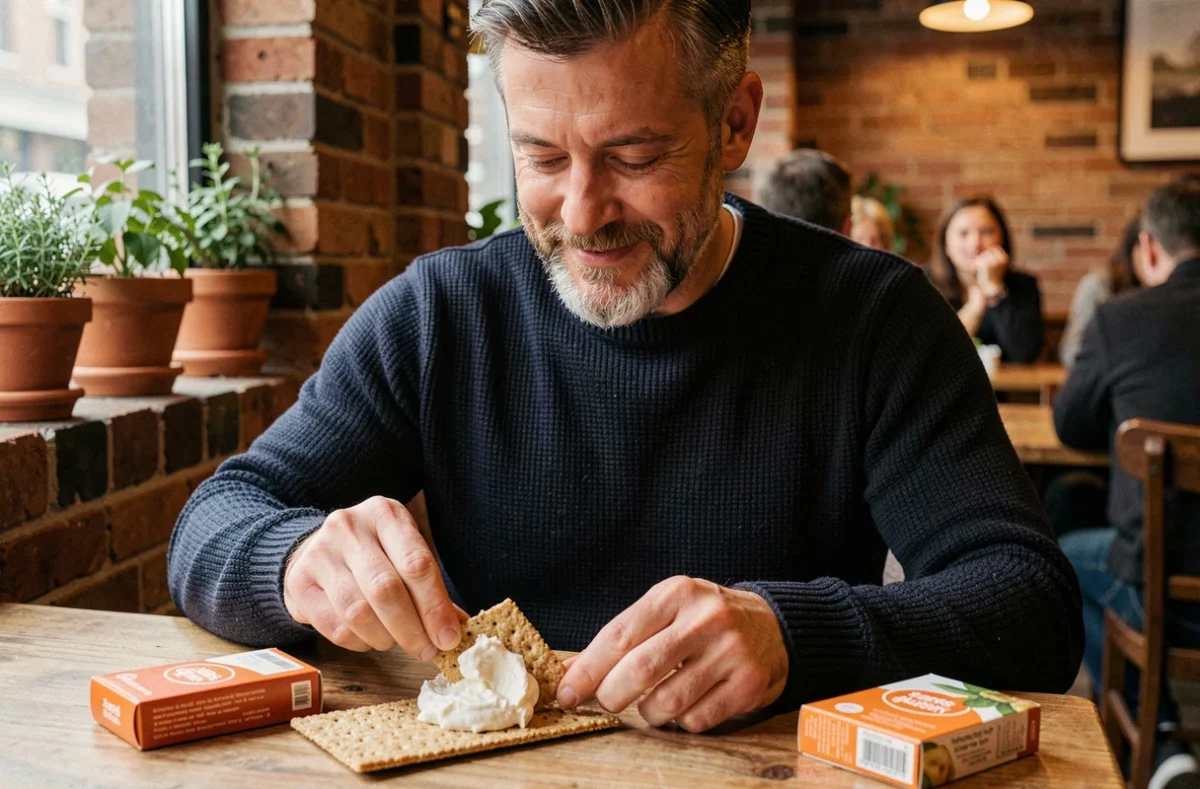
Which cheeses to choose concretely without the risk of gluten
Rather than an endless list of varieties, here are the criteria that really matter at the time of purchase:
- Hard cheeses aged for a long time (Comté, Parmesan, Emmental, Gruyère): simple composition, no additives, and aging also degrades a large part of the lactose.
- Plain soft cheeses (Camembert, Brie, Reblochon): without added flavorings or washed rinds with a gluten-containing product, they are safe.
- Plain goat and sheep cheeses: the same logic applies, the raw material (goat or sheep milk) does not change the reasoning about gluten.
- Fresh mozzarella or fior di latte: minimal composition (milk, rennet, salt), often available in pre-packaged format.
The safest choice is not a particular variety. It is a pre-packaged cheese with a short composition and clear traceability. A pre-packaged AOP Comté offers more guarantees than an artisanal cheese cut on a shared board, even if both are naturally gluten-free.
Plant-based alternatives also deserve careful consideration. Some use thickeners derived from grains containing gluten. Just because a product is “plant-based” does not automatically make it compatible with a gluten-free diet.
Ultimately, the approach boils down to two reflexes: check the ingredient list (three to four components, no more) and ensure that the cheese has not been contaminated after production. A good gluten-free cheese is primarily one whose journey is controlled, from milk to plate.